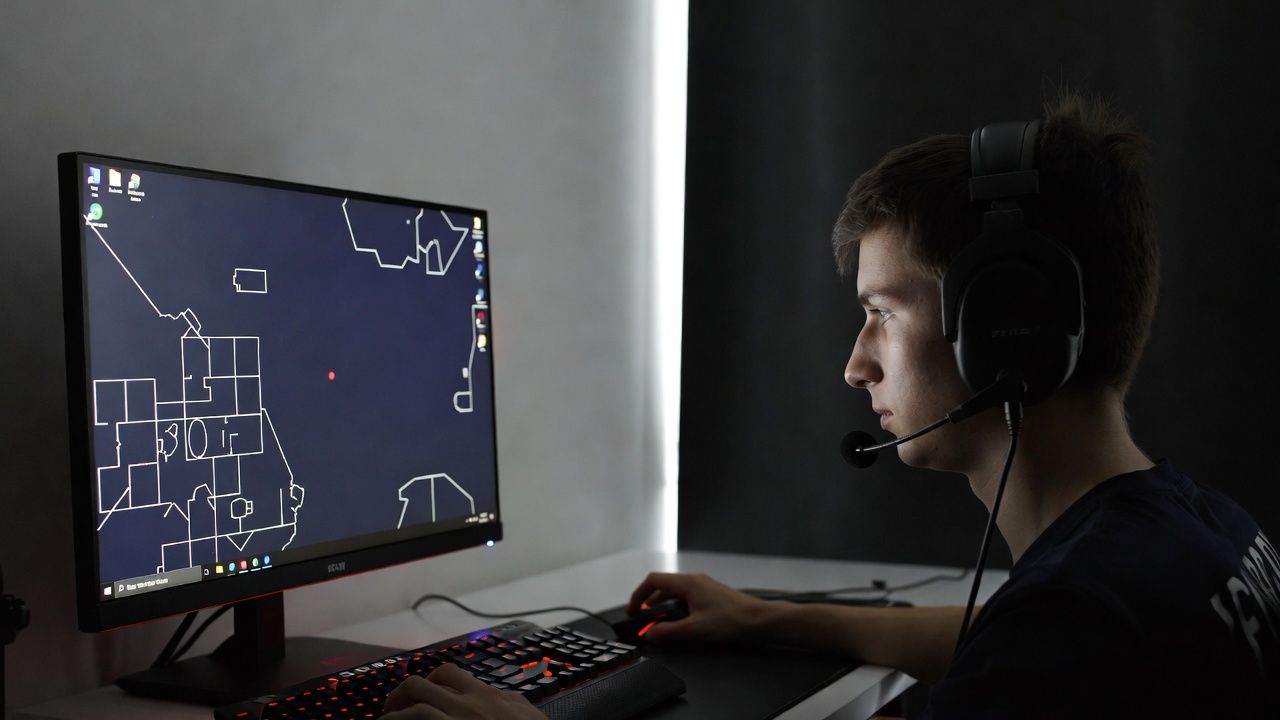
Behind every pixel-perfect flick is a thousand-line config file and a player who won’t stop tinkering.
If you’ve ever tuned into a pro’s stream early, you’ve probably seen it: the endless tabbing out, the console commands flying by, and the obsessive micro-adjusting of a slider that was already fine ten minutes ago. To a casual observer, it looks like a technical chore. To a high-level player, it’s a pre-game ritual. According to Valve’s own documentation and years of community-driven testing in Counter-Strike, these config files aren’t just “settings”; they are the bridge between your brain and the server. It sounds technical, sure, but anyone who has spent 500 hours in a tactical shooter knows better. Tuning your setup feels less like installing software and more like tuning a guitar before a gig. Every DPI shift and crosshair gap becomes part of your personal rhythm.
When you look at high-level breakdowns you aren’t just seeing numbers; you’re seeing a creative evolution built on thousands of “what if” moments and aim-train sessions. Look closely and you start to see a creative process unfolding, one built from tiny adjustments and endless trial runs.
Configuration Is a Creative Process

Ask a veteran player about their settings and you’ll usually get a story rather than a simple number. One player remembers lowering their sensitivity because their mouse pad was too small during a cramped late-night LAN session; another swears they discovered their “perfect” crosshair while waiting for teammates who never showed up for practice. These odd little moments shape setups that players stick with for years.Customization turns a generic game into something personal. A player might choose a neon green crosshair because it “pops” against the dusty yellows of de_Mirage, while another prefers a tiny white dot that barely moves. Neither choice is objectively better, yet both become signatures of how those players interact with the game. Much like those studying video game design to understand how mechanics influence behavior, players use these settings to bridge the gap between intent and action.
In many ways, configuration is an artist selecting brushes. Painters experiment with textures and pressure; competitive players experiment with DPI and view models. Same energy, different tools.
The Sensitivity Rabbit Hole
Sensitivity isn’t just a slider; for most of us, it’s a crisis of faith. You start thinking there’s a “god-tier” number used by the pros that will suddenly unlock your aim. Then you realize that while one Tier-1 pro is playing on a “low-sens” slog that requires full-arm swings, another is flicking heads using only their fingertips on a “high-sens” setup that would make a surgeon nervous.
“Muscle memory builds slowly, like learning chords. Once your hands adapt, even a 0.1 change feels like you’re playing with someone else’s hands.”
Professional players will spend weeks, sometimes months, obsessing over a tiny change. They’ll grind AimLabs for hours, only to scrap the whole config because “it just felt off” during a warm-up. The funny truth? The difference might be microscopic, but players swear they can feel it instantly. And yes, they will absolutely argue about it on Reddit for hours.
Resolution: Why “Ugly” is Better
If you show a non-gamer a pro’s screen, they’ll probably ask why a $3,000 PC is running a game that looks like it’s from 2005. This is the “stretched res” paradox. While modern monitors push 4K clarity, the competitive “sweat” is usually playing at 1280×960 stretched. It’s not about the aesthetics; it’s about the “feel.” By forcing a 4:3 aspect ratio onto a 16:9 screen, you’re effectively widening the player models. When a pixel-perfect headshot is the difference between a win and a tilt-inducing loss, having a “wider” target to track feels like a massive psychological edge. It’s not “pretty,” but when you’re holding a tight angle, you aren’t there for the scenery; you’re there for the win.
Playstyle Identity Through Settings
After enough hours, your configuration begins to mirror your identity. A patient player who holds angles might favor slower sensitivity and a minimal crosshair. Aggressive entry-fraggers often prefer faster movement settings and bold visuals that help them react during chaotic site takes. Studying professional setups highlights these patterns. Analysis of the MongolZ configuration in CS2, for example, shows choices that reflect fast decision-making and sharp mechanical precision. Those settings weren’t chosen randomly; they evolved through thousands of rounds of trial by fire. Change too much at once and the world feels “off”; the mouse feels heavier, the crosshair looks wrong, and even the audio cues feel unsettling.
Experimentation Never Really Stops
One of the quiet traditions of the scene is the “config hunt.” We download pro settings, borrow a teammate’s crosshair code, and test new ideas just to see if they stick. That spirit of tinkering is what keeps the community alive. Guides that break down the MongolZ setup aren’t supposed to be your final destination; they’re a canvas. At the end of the day, a .cfg file looks like a boring list of commands. But behind those lines of code is a signature style forged through curiosity and a lot of small adjustments. For competitive players, settings are not just technical tweaks. They are tools of expression. And like any creative craft, the process of refining them never truly ends.